If you’re getting ready to replace your driveway or add a new one, the first question on most homeowners’ minds is the same: what’s this going to cost? Concrete driveway pricing in Austin varies more than most people expect, and the national averages you’ll find online don’t account for the soil and site conditions that drive costs up in Central Texas. This guide covers what you’ll realistically pay, what affects the number, and what to watch for when comparing estimates.
Ace Construction Company Austin has been pouring concrete driveways in Austin since 2010. We’ve worked on every type of residential and commercial driveway project in the metro, from simple replacement pours in South Austin to complex hillside installs in Lakeway and Barton Hills. What we see on nearly every project is that the subbase and site conditions matter more to the final price than the concrete itself.
Austin Concrete Driveway Cost Overview
Most residential concrete driveways in Austin run between $6 and $12 per square foot, fully installed. That range covers material, labor, subbase preparation, forming, and cleanup. Here’s how that math works for typical residential driveway sizes:
| Driveway Size | Sq Ft | Typical Range | Notes |
| Single-car driveway | 300-400 | $2,000–$4,500 | Smaller scope, simpler access in most cases |
| Standard double-car | 500-650 | $3,500–$7,500 | Most common residential scope in Austin |
| Large double-car / wide | 700-900 | $5,000–$10,500 | Wider approach, longer runs, more forming labor |
| Extended with an apron | 900-1,200 | $6,500–$13,500 | Includes street apron, longer pour, more subbase |
These ranges assume broom-finished concrete, which is the standard residential finish in Austin. Broom finishing is the most durable, the most practical for Central Texas heat, and the most cost-effective option. It’s what we recommend for most residential driveways we install.
What Drives Concrete Driveway Costs in Austin
Several factors push a driveway project toward the lower or higher end of the range. Understanding them helps you evaluate quotes accurately.
Clay Soil Subbase Preparation
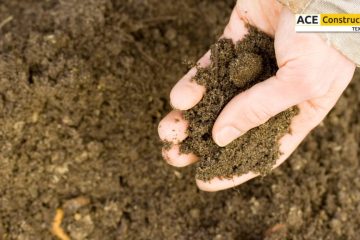
Austin’s clay soil is the single biggest cost variable that separates a Central Texas driveway install from a project in a market with stable soil. Clay expands when wet and contracts when dry. Concrete poured directly on poorly prepared clay will move seasonally and crack within a few years. Proper installation requires stripping organic material, bringing in crushed limestone base material, compacting it in lifts, and verifying drainage slope before any concrete is placed.
This subbase work adds cost compared to markets where contractors can pour on native soil with minimal preparation. It’s not optional, and it’s the difference between a driveway that lasts 30 years and one that needs replacement in 10. We address subbase conditions on every pour, regardless of what the existing surface looks like from above. The root cause of almost every failed driveway we’ve torn out in Austin is the subbase, not the concrete.
Driveway Dimensions and Access
Wider driveways cost more than narrow ones in both material and forming labor. A straight driveway costs less than one with angles or curves. Properties with limited equipment access, including tight side yards, low overhead clearance, or grade changes. These situations require more handwork and add labor cost. We assess access conditions during the site visit because they meaningfully affect the estimate.
Removal and Haul-Off of Existing Concrete
If you’re replacing an existing concrete driveway, the removal and haul-off of the old slab adds to the project cost. Breaking out reinforced concrete requires a jackhammer or saw-cutting, and the debris has to be hauled away. Expect to add $2 to $4 per square foot for removal, in addition to the new installation cost, for a standard unreinforced residential slab. Heavily reinforced slabs run higher.
Contraction Joint Layout and Reinforcement
Correctly placed contraction joints control where concrete cracks as it cures and as it moves seasonally. In Austin’s clay soil conditions, joint placement is especially important. A driveway without enough joints, or with joints in the wrong locations, will crack across the field rather than at the joints. Fiber reinforcement is standard in our pours. It doesn’t replace steel in structural applications, but it significantly reduces plastic shrinkage cracking in flatwork.
Drainage Slope and Grading
Every concrete driveway needs to shed water away from the structure. Establishing adequate drainage slope on flat lots or on lots that drain toward the garage requires grading work before the pour. On some Austin properties, this is straightforward. On others, establishing a proper drainage slope requires moving material, adjusting base elevations, or coordinating with an existing drainage service or inlet. We confirm the drainage slope during the estimate, so there are no surprises on pour day.
What’s Included in a Professional Driveway Installation
A complete concrete driveway installation from Ace Construction Company Austin includes the full sequence from ground to finish. We handle subbase preparation, including organic removal and placement of a crushed-limestone base, forming and layout, the pour and finish work, cutting or placement of contraction joints, curing protection during the initial hardening period, and cleanup and haul-off. We coordinate permit requirements where they apply, working with third-party permit partners who know Austin’s Development Services process.
What we don’t do is skip steps to lower the estimate. The Austin market has contractors who will pour directly on existing base material without assessing its condition, place joints at the minimum code spacing rather than what the specific site warrants, or skip curing protection on a hot pour day to move to the next job. These shortcuts don’t show up until two or three seasons later, when the driveway starts cracking across the field.
HOA Requirements in Austin Area Communities
If your property is in a master-planned community in Cedar Park, Round Rock, Pflugerville, or other Austin suburbs, check HOA design standards before getting estimates. Many communities govern driveway width, finish type, and the timeline for HOA approval before city permits are filed. We review HOA requirements as part of our estimate process and can help you understand the submittal sequence. Skipping HOA approval for a driveway replacement in a governed community can create compliance issues that are expensive to resolve.
Our service area covers all of these communities. We’ve been through the HOA approval process in Blackhawk, Pflugerville, Sunfield, Buda, Plum Creek, Kyle, and dozens of other master-planned communities across the metro. We know which HOAs have simple online submittals and which ones require design drawings with dimensions.
New Concrete vs Repair: When Does Each Make Sense?
Partial driveway repair makes sense when damage is isolated to one section, and the rest of the slab is in good condition. We saw-cut the damaged panel cleanly, removed it, prepped the subbase, and poured a new section. The new concrete won’t match the color and texture of the aged existing concrete, so appearance is a factor in this decision.
Full replacement makes sense when cracking is widespread across the slab, when the original installation had inadequate subbase preparation (which means the same failure will occur with partial repairs), or when the driveway is more than 20 to 25 years old under Austin’s conditions. We assess whether repair or replacement is the right answer during the site visit and give you our honest read rather than defaulting to the larger scope.
For concrete patios, concrete slabs, and concrete sidewalks, the same evaluation framework applies. Each project gets a site-specific assessment.
Getting a Concrete Driveway Estimate in Austin
Phone quotes and online form submissions produce ballpark ranges. Site visits produce accurate estimates. The site conditions that matter most, including subbase quality, drainage slope, equipment access, and existing slab condition, can’t be assessed remotely. For any project larger than a small repair, a site visit is the right starting point.
To schedule a site visit for a concrete driveway project in Austin or anywhere in Central Texas, call us at 512-265-1198 or submit a request on our contact page. We’ll confirm your location, schedule a visit, and walk the property with you before putting numbers together.